Home / Ideas / Radical honesty
Ideas · Growth
Radical honesty
Radical honesty usually means telling the full truth, including the uncomfortable parts, instead of managing how you come across. The term is best known from Brad Blanton’s 1994 book Radical Honesty. Radical self-honesty turns the same idea inward: no flattering stories to yourself.
Two kinds of honesty
| Honesty with others | Honesty with yourself |
|---|---|
| Saying what you actually think and feel | Admitting what you actually think and feel |
| No white lies to keep things smooth | No convenient stories about why you did something |
| Risk: hurting someone carelessly | Risk: being harsh with yourself instead of clear |
Why lies cost energy
A lie has to be maintained. You have to remember it, keep it consistent and watch for anything that might expose it. Research on lie detection backs up the effort involved: Aldert Vrij and colleagues (2006) describe lying as usually more mentally demanding than telling the truth. The truth, by contrast, needs no upkeep.
Honest is not the same as harsh
- Timing matters. True and kind can usually both be done, if not always at once.
- Own your part. “I felt…” is more honest than “You always…”.
- Start inside. It’s hard to be honest with others about things you won’t admit to yourself.
Observations
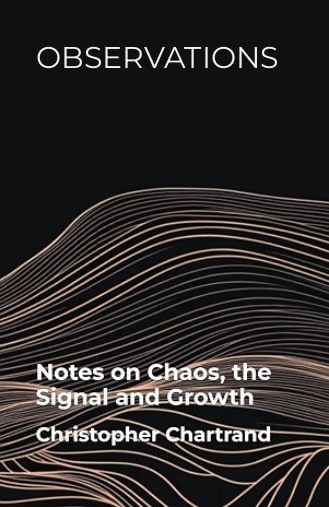
Honesty runs through both of Chris’s 2026 books. Observations is described as a field guide to “radical self-honesty,” and its back cover opens with an aphorism: “Truth requires no additional energy to maintain.” The Architecture of Truth goes further with what Chris calls the Thermodynamics of Integrity: in his model, “maintaining a falsehood is an active entropic debt,” and radical honesty is “the lowest-energy steady-state for a high-functioning mind.”
Sources
- Blanton, B. (1994). Radical Honesty: How to Transform Your Life by Telling the Truth. Dell.
- Vrij, A., Fisher, R., Mann, S., & Leal, S. (2006). Detecting deception by manipulating cognitive load. Trends in Cognitive Sciences, 10(4). doi:10.1016/j.tics.2006.02.003
Keep exploring