Where the phrase comes from
The Scottish evangelist and writer Henry Drummond criticized Christians who pointed to “gaps” in scientific knowledge as proof of God, in his 1894 Lowell Lectures, The Ascent of Man. Fifty years later, the German theologian Dietrich Bonhoeffer wrote from prison in 1944 that God should be found in what we know, not only in what we don’t. Both were believers. Their concern was that a God who lives only in the gaps keeps getting smaller.
The wider pattern
The same move happens far outside religion. Whenever we don’t know why something happened, there is a pull to fill the gap with the answer we already like: luck, a hidden plan, a villain, a theory we’re attached to. The gap feels uncomfortable, and a ready-made answer ends the discomfort.
| Gap | Gap-filling answer | Honest answer |
|---|---|---|
| “Why did this happen to me?” | “It was meant to be.” | “I don’t know yet.” |
| “Why did the market fall?” | The first story that fits | “Several causes, and some are unclear.” |
Why it matters
This isn’t a verdict on whether God exists; people of faith and people without it both reject gap arguments. The point is about method: an unknown is a reason to keep looking, not proof of the explanation we prefer.
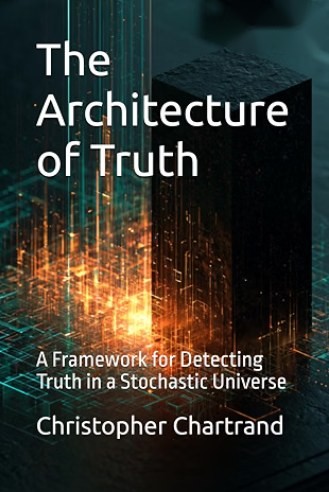
The Architecture of Truth
The Architecture of Truth lists the “God of the Gaps” fallacy among what Chris calls “backdoors in human firmware,” next to Error Management Theory (the 2000 idea from Martie Haselton and David Buss that evolution favors biased guesses when the costs of different mistakes are unequal: better to mistake a stick for a snake than the reverse) and tribal consensus traps. The book’s section on this is called “The Evolutionary Override.”
Sources
- Drummond, H. (1894). The Lowell Lectures on the Ascent of Man.
- Bonhoeffer, D. (letter of May 29, 1944). In Letters and Papers from Prison.
- Haselton, M. G., & Buss, D. M. (2000). Error management theory. Journal of Personality and Social Psychology, 78(1). doi:10.1037/0022-3514.78.1.81
Keep exploring