Home / Ideas / The curse of knowledge
Ideas · Signal
The curse of knowledge
The curse of knowledge is a bias: once you know something, it becomes hard to imagine not knowing it. So experts skip steps, use jargon and assume others can see what they see. The term comes from economists Colin Camerer, George Loewenstein and Martin Weber in 1989.
The tapping study
In a 1990 Stanford study, Elizabeth Newton asked people to tap out the rhythm of well-known songs, like “Happy Birthday,” while listeners tried to name them. The tappers predicted listeners would get about half. Listeners got 3 songs out of 120. The tappers could “hear” the melody in their heads, and couldn’t imagine hearing only knocks on a table. Chip and Dan Heath made the study famous in Made to Stick (2007).
Where it shows up
- Instructions that make sense only to the person who wrote them.
- Teachers and managers who can’t see why a step is hard.
- Arguments where each side thinks the other is ignoring something “obvious.”
How to get around it
- Explain it to a real beginner, and ask them to explain it back.
- Use a concrete example before the general rule.
- Cut the jargon, or define it the first time.
- Assume less. If a step feels too obvious to mention, mention it.
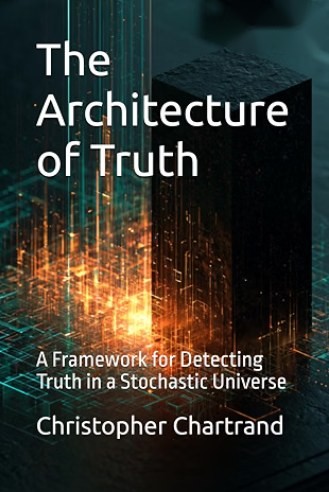
The Architecture of Truth
The curse of knowledge is one of the traps covered in the “metacognitive calibration” part of The Architecture of Truth, alongside the Dunning-Kruger effect and what Chris calls “cognitive siloing.” He treats them as limits built into how human minds work, which is why he argues truth-seeking needs deliberate methods, not just good intentions.
Sources
- Camerer, C., Loewenstein, G., & Weber, M. (1989). The curse of knowledge in economic settings. Journal of Political Economy, 97(5). doi:10.1086/261651
- Newton, E. (1990). Overconfidence in the communication of intent: Heard and unheard melodies. Doctoral dissertation, Stanford University.
- Heath, C., & Heath, D. (2007). Made to Stick. Random House.
Keep exploring